

A smile is more than just a curve on your face – it’s a powerful tool that can light up a room and instantly make you feel confident. But what if your smile has lost its luster? Don’t worry, because today we’re diving into the science behind teeth staining and exploring the options of teeth whitening. Get ready to unlock the secrets to brilliantly bright smiles that will leave everyone in awe! So grab your toothbrushes and let’s dive right in!
Understanding the science behind teeth staining and discoloration
Understanding the science behind teeth staining and discoloration can help us make informed decisions when it comes to achieving a brilliantly bright smile. Our teeth are composed of a hard outer layer called enamel, which is naturally white. However, over time, this enamel can become stained or discolored due to various factors.
One common cause of tooth discoloration is the consumption of certain foods and beverages such as coffee, tea, red wine, and dark-colored fruits. These items contain pigments that can seep into the enamel and result in stains. Additionally, tobacco use can also lead to yellowing or browning of the teeth.
Another factor contributing to tooth discoloration is poor oral hygiene. When we don’t brush and floss regularly, plaque buildup occurs on our teeth’s surfaces. This sticky film not only harbors bacteria but also attracts stains from food and drinks.
Furthermore, aging plays a role in teeth staining too. As we grow older, our enamel thins out gradually due to wear and tear. This exposes the underlying dentin layer – a yellower substance than enamel – causing our teeth to appear more dull or discolored.
Common methods of teeth whitening:
Over-the-Counter Products:
When it comes to teeth whitening, there is no shortage of options available at your local drugstore. From whitening toothpaste and mouthwashes to whitening strips and gels, over-the-counter products offer a convenient way to brighten your smile from the comfort of home. These products often contain mild bleaching agents or abrasives that help remove surface stains. While they may not provide dramatic results, they can be effective for maintaining a moderately white smile.
Professional Treatments:
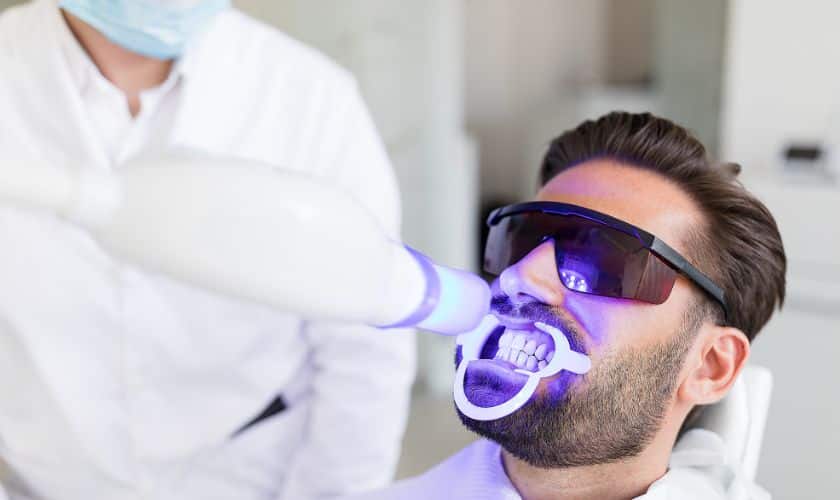
For those looking for more significant results, professional teeth whitening treatments are worth considering. In-office treatments involve applying a strong bleaching agent directly onto the teeth and using special lights or lasers to enhance the effectiveness of the treatment. On the other hand, at-home professional treatments involve custom-made trays filled with a bleaching gel that you wear for several hours each day.
The Risks and Benefits:
While over-the-counter products are generally safe when used as directed, they may cause tooth sensitivity or gum irritation in some individuals. Professional treatments carry similar risks but under the supervision of dental professionals who can monitor any adverse reactions more closely.
– Over-the-counter products (toothpaste, strips, etc.)
Over-the-counter teeth whitening products have become increasingly popular in recent years, offering a convenient and affordable option for those looking to brighten their smile. From whitening toothpaste to strips and gels, there is an abundance of options available on the market.
Whitening toothpaste is one of the simplest forms of over-the-counter teeth whitening. These toothpastes contain abrasive particles that help remove surface stains from your teeth. However, it’s important to note that they may not be as effective at removing deep-set stains or dramatically lightening the shade of your teeth.
Teeth whitening strips are another common choice for at-home treatments. These thin, flexible plastic strips are coated with a bleaching agent and are applied directly onto the teeth. They’re typically worn for about 30 minutes each day over a period of several weeks. While they can be effective in improving discoloration, results may vary depending on individual factors such as the severity of staining and adherence to usage instructions.
Gels and pens are also available as over-the-counter options for teeth whitening. These products usually come with trays or applicators that allow you to apply the gel directly onto your teeth. The gel contains hydrogen peroxide or carbamide peroxide, which helps break down stains and lighten the color of your enamel.
While over-the-counter products offer convenience and affordability compared to professional treatments, it’s important to manage expectations regarding their effectiveness. It’s always recommended to consult with a dentist before starting any new dental regimen or product use.
Remember that consistent oral hygiene practices such as brushing twice daily, flossing regularly, avoiding stain-causing foods/drinks (like coffee or red wine), along with routine dental check-ups will contribute significantly towards maintaining a beautiful white smile!
– Professional treatments (in-office and at-home)
Professional treatments for teeth whitening offer a more powerful and effective solution compared to over-the-counter products. These treatments can be done in-office or at-home, depending on your preference and budget.
In-office professional treatments are typically performed by a dentist or dental hygienist. They involve the use of stronger bleaching agents that can quickly and dramatically whiten your teeth in just one session. The procedure usually takes about an hour, during which a protective gel is applied to the gums to prevent any sensitivity.
On the other hand, at-home professional treatments involve using custom-made trays provided by your dentist along with a whitening gel. This option allows you to achieve similar results as in-office treatments but at a slower pace. You will need to wear the trays for several hours each day or overnight, depending on your dentist’s instructions.
Both methods have their benefits and considerations. In-office treatments provide immediate results while at-home options allow for flexibility and convenience. It’s important to consult with your dentist to determine which option is best suited for you based on factors such as the severity of discoloration, desired outcome, and any existing dental conditions.
The risks and benefits of each method
When it comes to teeth whitening, there are a variety of methods available, each with its own set of risks and benefits. Let’s take a closer look at the options.
Over-the-counter products such as toothpaste and whitening strips offer convenience and affordability. These products often contain mild bleaching agents that can help remove surface stains. However, they may not be as effective for deeper discoloration or stubborn stains. It’s also important to follow the instructions carefully to avoid potential damage to your enamel.
On the other hand, professional treatments administered by dentists can provide more dramatic results. In-office procedures like laser or light-activated whitening can lighten your teeth several shades in just one visit. At-home professional kits typically involve custom-fitted trays filled with a stronger bleaching gel provided by your dentist. This allows for more consistent and precise application.
While professional treatments generally yield better results, they do come with some risks. Sensitivity is a common side effect, especially with higher concentrations of bleach used during in-office procedures or in at-home kits prescribed by dentists. Gum irritation is another potential issue if the bleaching agent comes into contact with soft tissues.
Conclusion: Achieving a brilliantly bright smile is within reach
Achieving a brilliantly bright smile is within reach. With the wide range of teeth whitening options available, there is no reason to continue hiding your pearly whites behind stains and discoloration. Whether you choose over-the-counter products or opt for professional treatments, the science behind teeth whitening can help you achieve the smile of your dreams. Remember, it’s important to understand that results may vary depending on individual factors such as the severity of staining and overall dental health. It’s always a good idea to consult with a dentist before starting any teeth whitening regimen to ensure it is safe and suitable for your specific needs. So why wait? Start exploring the science and options of teeth whitening today. Embrace confidence as you flash those brilliantly bright smiles that will leave others in awe. Because when it comes to smiling, there should be nothing holding you back!